Navigating the Scent World: Eau de Parfum vs Eau de Toilette
Walking up to a fragrance counter can feel a bit like stepping into a labyrinth. You’re surrounded by gorgeous bottles, all promising a unique experience, but the labels are covered in French terms that can be more confusing than helpful. I see it all the time: someone loves a scent, but they’re stuck staring at two nearly identical boxes, one labeled “Eau de Parfum” and the other “Eau de Toilette.” If you’ve ever wondered what the real difference is, you are not alone. Understanding the nuances of Eau de Parfum vs Eau de Toilette is one of the most fundamental and empowering pieces of knowledge you can have as a fragrance lover.
Key Takeaways
- The primary difference is the concentration of pure perfume oil. An Eau de Parfum (EDP) has a higher concentration (typically 15-20%) than an Eau de Toilette (EDT), which has a lower concentration (typically 5-15%).
- Higher oil concentration generally leads to better longevity. This means an Eau de Parfum will usually last longer on your skin than its Eau de Toilette counterpart.
- The scent profiles are often different. Perfumers frequently adjust the notes, meaning an EDP isn’t just a stronger version of the EDT; it can be a distinct fragrance with a different character or mood.
- Projection and sillage aren’t always stronger in an EDP. The higher alcohol content in an EDT can sometimes cause it to project more intensely for the first hour before it begins to fade.
- Price reflects the oil concentration. EDPs are typically more expensive, but because you may need fewer sprays for lasting performance, they can sometimes offer better long-term value.
The Core Difference: It’s All About Concentration
What is the real difference between Eau de Parfum and Eau de Toilette?
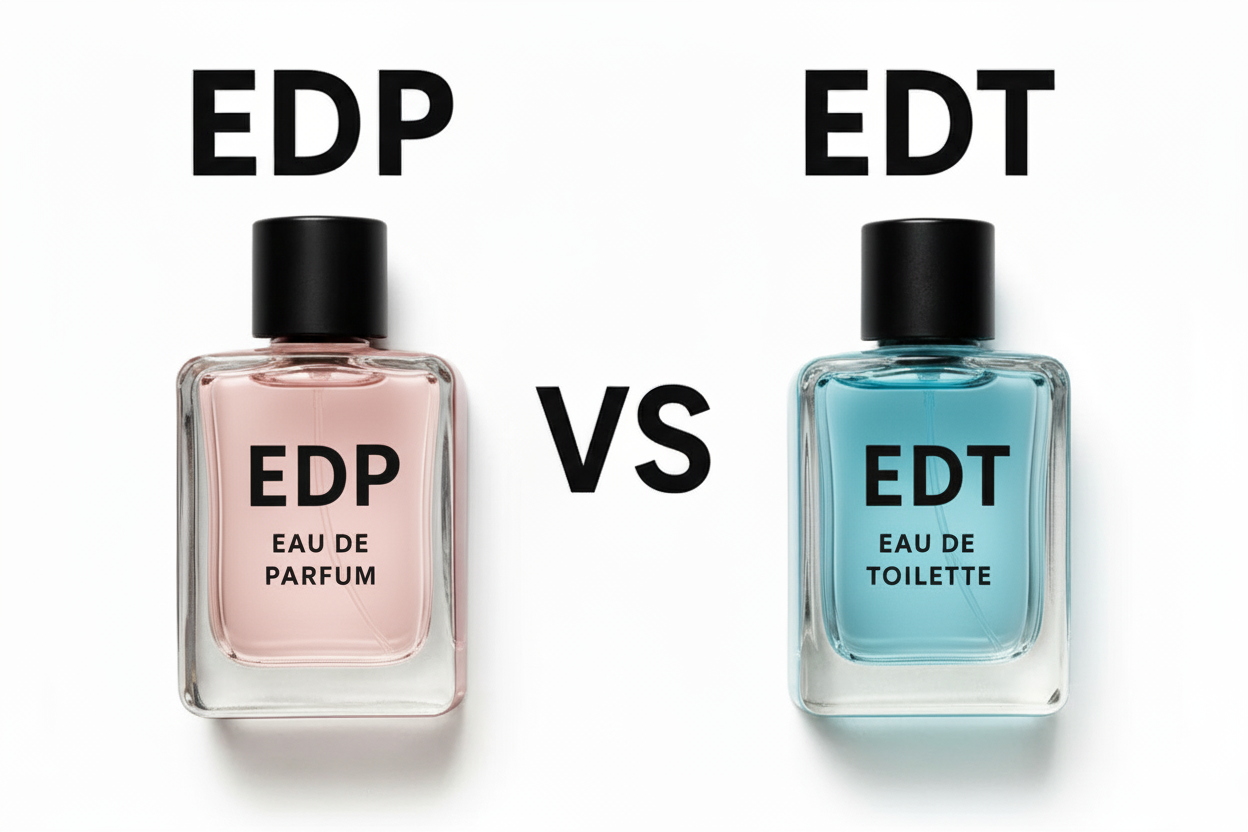
The most straightforward answer lies in the numbers. An Eau de Parfum (often abbreviated as EDP) contains a perfume oil concentration of somewhere between 15% and 20%. This higher percentage of aromatic compounds makes it richer and more potent. On the other hand, an Eau de Toilette (or EDT) has a lower concentration, generally falling between 5% and 15%. This lighter composition is what defines its character. This is the core technical difference between eau de parfum and eau de toilette, and it influences everything from the price to how the fragrance wears throughout the day.
What does Eau de Toilette mean, anyway?
The name itself can be a bit confusing, but its history sheds some light. “Toilette” comes from the French phrase “faire sa toilette,” which means the act of grooming or getting ready. An Eau de Toilette was originally a light, scented water used for refreshment as part of one’s daily grooming ritual—something to splash on the face and body. So, if you’re wondering what does eau de toilette mean, think of it as a “grooming water.” Its purpose was to provide a pleasant but subtle scent, which aligns perfectly with its lower concentration today. The Eau de Toilette meaning is rooted in this history of being a light, everyday refreshment.
And what about the Eau de Parfum meaning?
This one is more direct. “Parfum” is the French word for perfume. So, Eau de Parfum simply translates to “perfumed water.” However, within the fragrance industry, the term has evolved to signify a specific strength. While “Parfum” or “Extrait de Parfum” is the highest concentration you can buy (20-30%+), the eau de parfum meaning designates the popular, long-lasting concentration just below it. It was developed to offer a scent experience with more presence and longevity than a traditional Eau de Toilette but without the intensity (and high cost) of a pure Extrait.

Eau de Parfum vs Eau de Toilette: How Performance Changes
Does an EDP always last longer than an EDT?
In my experience, the answer is almost always yes. The higher concentration of perfume oils in an Eau de Parfum means there are more aromatic molecules on your skin. Additionally, the lower alcohol content causes it to evaporate more slowly. This combination is what gives an EDP its superior longevity, often lasting 6-8 hours or more, while an EDT might last for 3-5 hours. That said, it’s not an absolute rule. The specific notes in a fragrance (heavy woods last longer than fleeting citruses) and your personal skin chemistry can also have a huge impact. The most critical factor is always your own skin.
If an EDP is stronger, does it always project more?
This is one of the biggest misconceptions in the Eau de Toilette vs Eau de Parfum debate. We often equate strength with projection—how far the scent pushes away from your body—but they aren’t the same thing. Because an Eau de Toilette has a higher percentage of alcohol, its top notes can “launch” off the skin more aggressively upon first spray. This can create a stronger, more noticeable scent bubble for the first hour or so. An Eau de Parfum, with its higher oil content, tends to stay closer to the skin, creating a more personal and persistent aura rather than a loud statement. It’s a trade-off: The EDT might shout, while the EDP speaks clearly all day.
Will the EDT and EDP versions of the same fragrance smell identical?
Expecting them to be identical is a common beginner mistake. Often, they are not simply diluted or concentrated versions of each other. Many perfumers, like the master François Demachy for Dior or Jacques Polge for Chanel, use the different concentrations as an opportunity to highlight different facets of a fragrance. For example, in Chanel Chance, the Eau de Toilette feels brighter and more sparkling with citrus and pink pepper, while the Eau de Parfum is rounder, with a greater emphasis on the jasmine and amber-patchouli base. The bottom line is: always test both, as you might find you strongly prefer one scent profile over the other.

Making the Right Choice: Which One is For You?
When should I choose an Eau de Toilette?
An Eau de Toilette is often the perfect choice for daily wear, especially in professional or enclosed settings like an office. Its lighter presence is less likely to be overwhelming to those around you. I find that EDTs truly shine in high heat and humidity, as their bright, crisp character feels refreshing rather than cloying. If you prefer a more subtle fragrance or enjoy the ritual of reapplying your scent midday, then the Eau de Toilette vs Eau de Parfum choice leans heavily toward the EDT. It’s the ideal daytime companion.
And when is an Eau de Parfum a better fit?
You should reach for an Eau de Parfum when longevity is your top priority. It’s the superior choice for long days, special events, or date nights when you want your fragrance to last from evening until morning. The richness and depth of an EDP also make it particularly well-suited for colder weather, as the scent can cut through the cold air more effectively. If you want a more intimate scent bubble that lingers beautifully on your skin and clothes, the contest of Eau de Parfum vs Toilette is easily won by the EDP.
Is the price difference worth it?
Looking at the price tags, the difference between Eau de Toilette and Parfum can be significant. EDPs are almost always more expensive upfront due to the higher cost of the perfume oils. However, this is a question of price versus value. Because an Eau de Parfum is more concentrated, you can often get away with using fewer sprays. A single bottle might last you just as long, or even longer, than a cheaper EDT that requires frequent reapplication. The better value depends on your personal usage and preference. If you love a powerful, long-lasting scent, investing in the EDP is often the smarter financial choice in the long run.

Final Verdict
So, where do we land in the great Eau de Parfum vs Eau de Toilette debate? The most important takeaway is that one is not inherently superior to the other. They are simply different formulations designed for different purposes. The choice isn’t about quality, but about intent. Do you want a light, refreshing scent for a summer afternoon, or a rich, enduring fragrance for a winter evening? Are you in a crowded office or on a romantic date? Answering these questions will guide you to the right bottle every time.
Understanding the difference between an Eau de Parfum and an Eau de Toilette demystifies the fragrance counter and puts the power back in your hands. It allows you to move beyond the label and make an educated choice based on concentration, desired longevity, and scent character. My advice is to always try both versions of a fragrance you love on your skin. You may be surprised to find that the brighter EDT speaks to you more than the richer EDP, or vice versa. This knowledge is your most valuable tool for building a collection that you will truly love and wear with confidence.